


Five practical tips for successful hardware engineering in the chemical industry
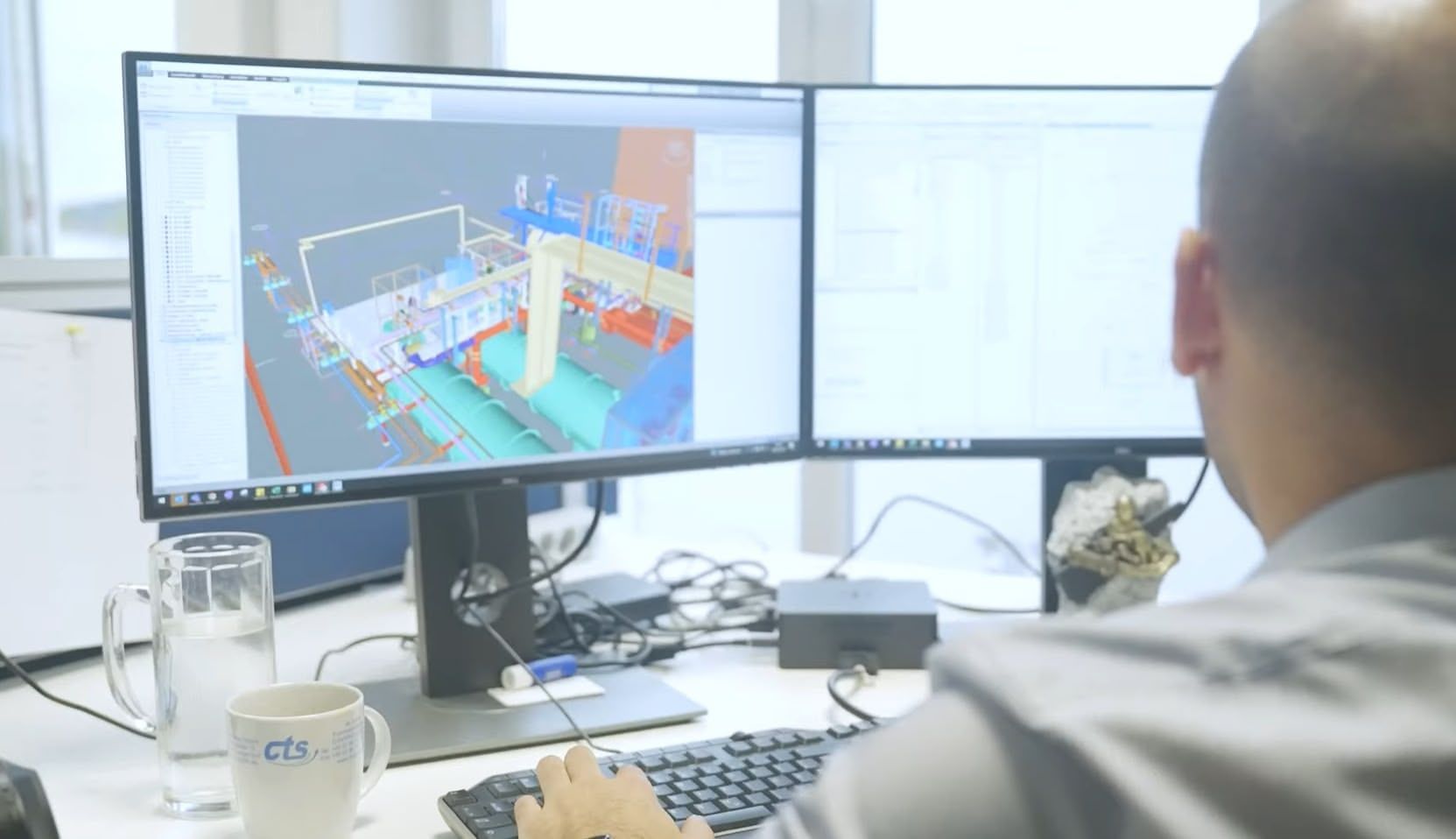
Hardware engineering encompasses the planning, design, and implementation of electrical and electronic systems—from medium-voltage transformers to low-voltage distribution and switch cabinet technology to the field level, which in the process industry is considered the technical foundation for reliable, safe production processes and the basis for powerful software. It refers to the planning, design, and implementation of electrical and electronic systems.
In industrial plants, these start at the medium-voltage transformer, run through low-voltage distribution systems to control cabinets, and down to the field level. “So you could say that in the process industry, hardware forms the technical foundation for reliable and safe production processes. It is the basis on which software can unfold,” explains Philipp Raiger from the Hardware Engineering management team. However, time pressure, data overload, and a bureaucratic jungle of standards and documentation are driving up the costs of hardware engineering. Five practical tips can help you avoid typical stumbling blocks, streamline project duration, and minimize associated costs.
Tip 1: Plan your hardware early and in detail
“What we often see is that hardware specifications change and become more detailed even though the planning for the system has already been completed,” reports Philipp Raiger. “In some cases, the control cabinet construction is already underway.” The effort required to implement such subsequent changes is often underestimated.
An example: A SIL (Safety Integrity Level) shutdown added at short notice sounds harmless, but has repercussions throughout the entire project. The planning has to be rolled back, the wiring adapted, and the safety assessment revised. A seemingly small change turns into a cost and time driver.
The alternative: Integrate hardware engineering into the basic design phase of the plant. Philipp Raiger is convinced that changes during the ongoing project can be significantly reduced if control cabinet concepts, typical measuring devices, and suitable control systems are in place early on. “Even though subsequent changes can never be completely avoided in large projects, considering hardware engineering from the outset saves time and costs and creates a clear structure right from the start.”
Tip 2: Create a comprehensive database
Modern projects generate huge amounts of data that different teams need to access. Whether it's measurement point lists, IO assignments, or device specifications, everyone needs the latest version of the document or model, ideally without any media discontinuity. “The solution lies in a holistic database that works seamlessly for all areas, from initial planning to commissioning,” explains Philipp Raiger.
An integrated database provides the basis for this. Planning data such as measurement point lists are imported there, ideally at the beginning of the project. From then on, everything is linked: measuring device design, IO assignment, control cabinet construction, assembly, and loop checking. Each measurement point can be tracked until commissioning. This means that everyone always has the latest data they need.
Standardized formats are another key component. They reduce media discontinuity and improve compatibility within the planning process, as well as with downstream trades. This allows data for switch cabinet production to be transferred efficiently, for example. The switch cabinet manufacturer receives all relevant information in a complete and uniform structure – from circuit diagrams and assembly plans to drilling patterns and labeling data. This allows planning, mechanical processing, and wiring to mesh smoothly. The combination of a comprehensive database and standardized formats minimizes errors and ultimately saves time because nothing is overlooked.
Tip 3: View compliance as a planning tool
EN 61439, ATEX, functional safety – standards and documentation requirements shape everyday hardware operations. Instead of viewing them as bureaucratic hurdles, they should be used as planning tools. Philipp Raiger emphasizes: “Ultimately, it's about the system doing what it's supposed to do – safely and reliably.” Standards are a means to an end, not an end in themselves. The key is not to quote them, but to implement them in practice – so that the system works technically, formally, and operationally.
The same philosophy applies to documentation: it should be an integral part of planning, not something that is created in parallel. This is where the database (tip 2) comes into play. The relevant documents can be created from the basic technical data. Changes remain traceable and the documentation up to date – without duplicate data storage. This turns what is often perceived as a tedious obligation into real added value for quality assurance and traceability.
Tip 4: Choose tools specific to the project
PLAN, COMOS PT, ELCAD, WSCAD – there is a wide range of CAE and CAD tools to choose from. But not every software is suitable for every project. “There is no ‘one size fits all’ solution here,” says Philipp Raiger, describing project practice.
Each system has specific strengths and weaknesses. However, it is not the latest feature that is decisive, but rather integration into the project structure. “When we have a free choice at cts, we prefer to use EPLAN. The reason is simple: the connection to our internal systems – especially our database – works most smoothly here,” explains Philipp Raiger. “However, the software that is best suited for a project always depends on our customers' standards.” At the start of planning, careful consideration should therefore be given to which tools will be used.
Tip 5: Distribute knowledge within the team in a targeted manner
Standards change, tools evolve, and new components come onto the market. Staying up to date without getting bogged down requires strategy: for example, specialization within the team combined with active knowledge transfer.
“Areas such as ATEX, safety engineering, and measuring device design are assigned to individual specialist teams at cts,” says Philipp Raiger. “They keep up to date in their field and pass on their knowledge internally where it is needed.” This has two advantages: the expertise remains within the company and no one is overwhelmed with irrelevant information. Instead, everyone involved in the project receives exactly the information that is relevant at that moment – at the right time and in the right depth. This cooperation also ensures that functioning teams are formed and that knowledge is gradually expanded among all team members from project to project.
Whether digital tools, team specialization, efficient processes, or collaboration—hardware engineering in everyday process automation involves the interplay of many factors. It is not a single tool or standard that is decisive, but how everything is integrated so that systems can be operated in a stable, traceable, and efficient manner.
If you are facing similar issues or need support in hardware engineering, please feel free to contact us. Together, we will develop solutions that work in your production environment – reliably, transparently, and with a view to the future.