


Manual magazine logistics as a bottleneck in SMT manufacturing
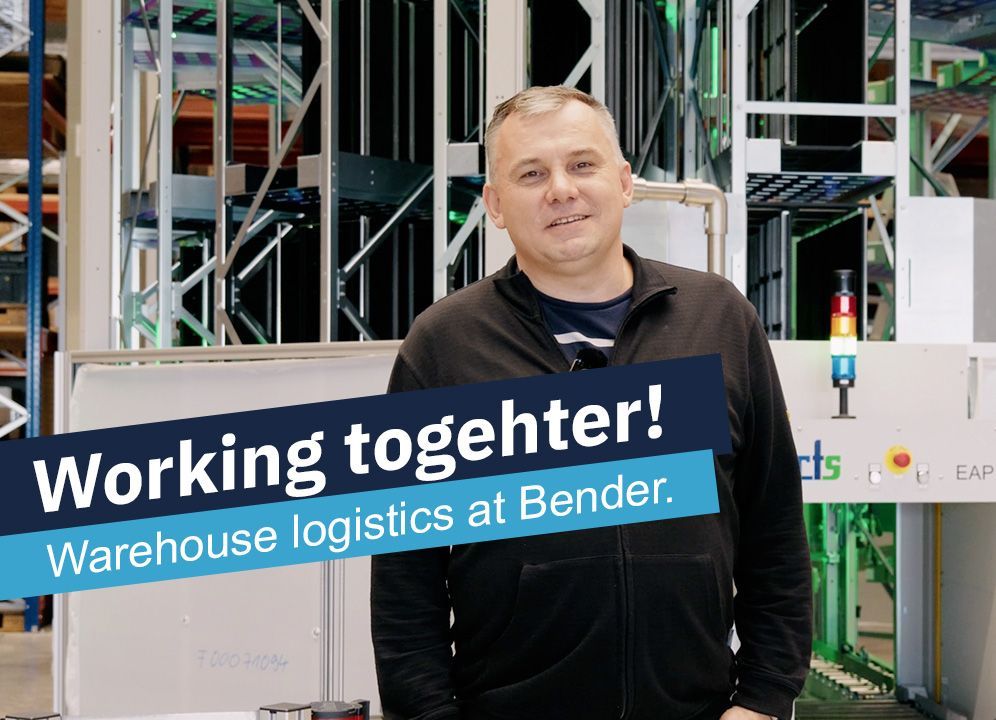
How can efficiency in electronics manufacturing be increased when there is a high degree of product diversity? Many companies face the challenge of manual search times, confusing magazine storage, and a lack of digital transparency, all of which reduce line availability. Bender GmbH has found a solution to this problem: by using our Smart Warehouse / Mini, magazine logistics have been automated directly on the SMT line.
In this case study, you will learn how Bender has reduced manual transport effort to almost zero, increased inventory accuracy to over 99%, and reclaimed valuable production space with a decentralized and scalable storage solution. Krzysztof Lison, Head of Industrial Engineering at Bender, provides exclusive insights into the requirements, implementation, and measurable successes of this automation project.
In the first part of our interview with Mr. Lison, you will learn how confusing magazine storage and manual search times burden line production and what hidden costs arise from a lack of transparency in material flow. An interview with Mr. Lison, Head of Industrial Engineering at Bender, about optimizing material flow in electronics manufacturing.
Lack of transparency in material flow
cts: Before we decided on the solution from cts, we faced considerable challenges, particularly in handling our PCB magazines.
Mr. Lison: Before we decided on the solution from cts, we faced considerable challenges, particularly in handling our PCB magazines.
The main problem was the confusing magazine storage. The magazines were temporarily stored in too many different places – on the lines, in buffer zones, or on transport trolleys. This meant that we lacked a clear overview of which magazines were located where and which assemblies they contained.
cts: That sounds like a lot of searching. What direct operational costs did this manual storage incur?
M. Lison: That hits the nail on the head! It led to time-consuming manual searches and transport. Employees had to constantly search for magazines, sort them, and move them manually between production steps. These unnecessary trips led to a considerable loss of time.
Another major problem was the lack of traceability and allocation. Often, it was not clearly documented which circuit board was in which magazine or in which process step the magazine was currently located. This made tracking throughout the entire production flow extremely difficult.
cts: Electronics manufacturing in Europe, especially in variable production, depends on cycle times and availability. How much have these bottlenecks affected your line production?
M. Lison: This resulted in unplanned waiting times on the lines. If magazines were not ready on time, this inevitably led to downtime or interruptions in the assembly process. This became a real problem, especially with our frequent product changes.
cts: You mention temporary storage – was manual organization also a problem in terms of space or order?
M. Lison: Absolutely. Manual storage caused space problems and inefficient use of storage areas. Many magazines were in the way or had to be moved several times. This ultimately affected order and safety in the production environment.
cts: What role did the digital connection to your systems play?
M. Lison: It was simply missing. There was no automated connection to the manufacturing system. We had no digital interface to automatically record the magazine status (empty, full, in progress) or the exact position. Information had to be entered manually into our ERP or MES, which was cumbersome and prone to errors.
In short: Before the introduction of the Smart Warehouse / Mini, the material flow of the PCB magazines was heavily manual, not very transparent, and prone to errors. The cts system was introduced to create transparency, automation, and traceability, and to significantly reduce manual handling and search times.
Variety: The manual bottleneck
cts: The high degree of product variety is a characteristic feature of modern electronics manufacturers in Europe. In the video, you explain that automation also reduces manual tasks. How has this high degree of product variety affected manual material provision in the past?
M. Lison: The wide variety of our products was one of the biggest challenges in material provision in the past. Frequent product changes meant constant material changes. Each variant required its own circuit boards, components, and magazines. This meant that materials had to be constantly changed, checked, and re-supplied. This led to a high level of manual effort in logistics and on the production lines.
cts: And what risks did this create?
M. Lison: The risk of increased error susceptibility was high. With many similar variants, it was easy to confuse magazines or assemblies. Even for experienced employees, correctly assigning materials was difficult without digital support.
Added to this was a factor that affects us all: time. Manually compiling the materials required for the next series took a lot of time. This resulted in increasing time pressure during setup preparation, which in turn led to waiting times at the SMT lines because the setup stations were not prepared in time.
cts: What did that mean for the storage?
Herr Lison: Due to the wide variety of variants, the number of material types and magazines grew constantly. This led to inefficient storage and search processes, as employees often had to search for specific magazines for a long time. It was also difficult to maintain transparency regarding material status and availability – planning and prioritization were heavily dependent on empirical knowledge.
The wide variety of options has made manual material flow enormously complicated. With the Smart Warehouse / Mini from cts, we were able to automate many of these activities – from magazine management to material provision—while significantly increasing transparency and process reliability.
The hidden costs: What manual processes really cost
cts: Apart from pure search times, what specific “costs”—whether in the form of lost working time, increased error rates, unnecessary capital expenditure, or line downtime—have manual material provisioning and buffering processes caused in the past?
M. Lison: In addition to pure search times, manual processes incurred a whole range of hidden costs and risks for us. One key issue was the loss of productive working time. Highly qualified employees in production spent a considerable amount of their time on non-value-adding activities, such as searching for materials, transporting magazines, or reconciling inventories. This time was then lost for actual production or quality tasks.
Added to this were increased error rates and rework costs. Manual handling and unclear material flows repeatedly led to incorrect provisioning or mix-ups between variants. In the worst case, this resulted in line stoppages due to incorrect material batches.
cts: How did the lack of transparency affect your capital?
M. Lison: Because it was not clear where certain materials or magazines were located, we had to keep more material in circulation to compensate for bottlenecks. This meant high circulation and safety stocks, tied-up capital, full storage space, and increased logistical costs. And, of course, unplanned line downtime. If materials were not available on time, there were regular stoppages or waiting times on the SMT lines. Even short interruptions cause noticeable costs in high-throughput areas.
cts: In doing so, you also describe inefficiencies in the organization.
M. Lison: That's right. There was inefficient use of space and personnel. Temporary storage areas were overused, distances were long, and tasks could hardly be standardized. This made planning and shift coordination unnecessarily difficult.
The actual trigger for us to look into automation was a combination of increasing product diversity, growing volumes, and the desire to deploy our skilled workers in a more targeted manner. We wanted to relieve our employees of routine and search tasks, increase process reliability, and create transparent, digital material flows—in other words, take the next step toward truly networked, automated SMT production.
The solution: Flexible automation close to the production line
cts: You made a conscious decision to go with the solution from cts. Why was the Smart Warehouse/Mini – a line-oriented and variable solution—the right answer to your challenges? What was the decisive difference compared to other systems?
M. Lison: For us, the Smart Warehouse / Mini was the right solution because it fits perfectly with our production reality – close to the line, flexible, and scalable.
cts: How important was the “close to the line” factor compared to other logistics concepts?
M. Lison: It was essential. We didn't want a large, centralized system with long transport routes, but rather a decentralized, direct connection to the SMT lines. The Smart Warehouse / Mini makes it possible to buffer materials and magazines directly where they are needed – without long search or travel times.
Our product range includes a wide variety of product variants and different PCB formats. The cts system can flexibly accommodate precisely this variable handling of different products – in other words, exactly the mix that occurs in modern SMT production and thus exactly the solution we were looking for.
cts: What role did integration play?
M. Lison: Space is always limited on the lines. The compact design and easy integration were major advantages here. The Smart Warehouse / Mini requires little floor space and could be integrated into our existing infrastructure without any major modifications. The interfaces to ERP and MES were also quick to implement.
Automatic data feedback and data transparency are also a major benefit. Every magazine movement is automatically recorded and reported to the system. This means we know at all times where each material is located, what condition it is in, and when it is needed. This level of transparency was not possible with a traditional manual or centralized system.
cts: The concept envisages gradual automation. Was that a decisive factor?
M. Lison: Yes, the option of gradual automation was important to us. The cts concept allows you to start with a smaller, line-oriented system and expand it later. This was important to us in order to keep investment risks low and gain experience during operation.
The decisive difference compared to other providers was the combination of flexibility, proximity to the line, and easy integration. The Smart Warehouse / Mini did not fit into our production as a foreign body, but as a genuine part of our material flow.
Are you ready to tackle your SMT handling bottlenecks?
The transition from manual material handling to autonomous intralogistics is crucial for maximizing line utilization and ensuring compliance. Talk to the experts who will tailor the solution to your factory.
Contact the manufacturing automation specialists at cts Group today to learn more about our solutions for the challenges faced by modern SMT manufacturers.